fol. 44r
Book two, chapter two: On concerted counterpoint
-ultima figura de canto llano.
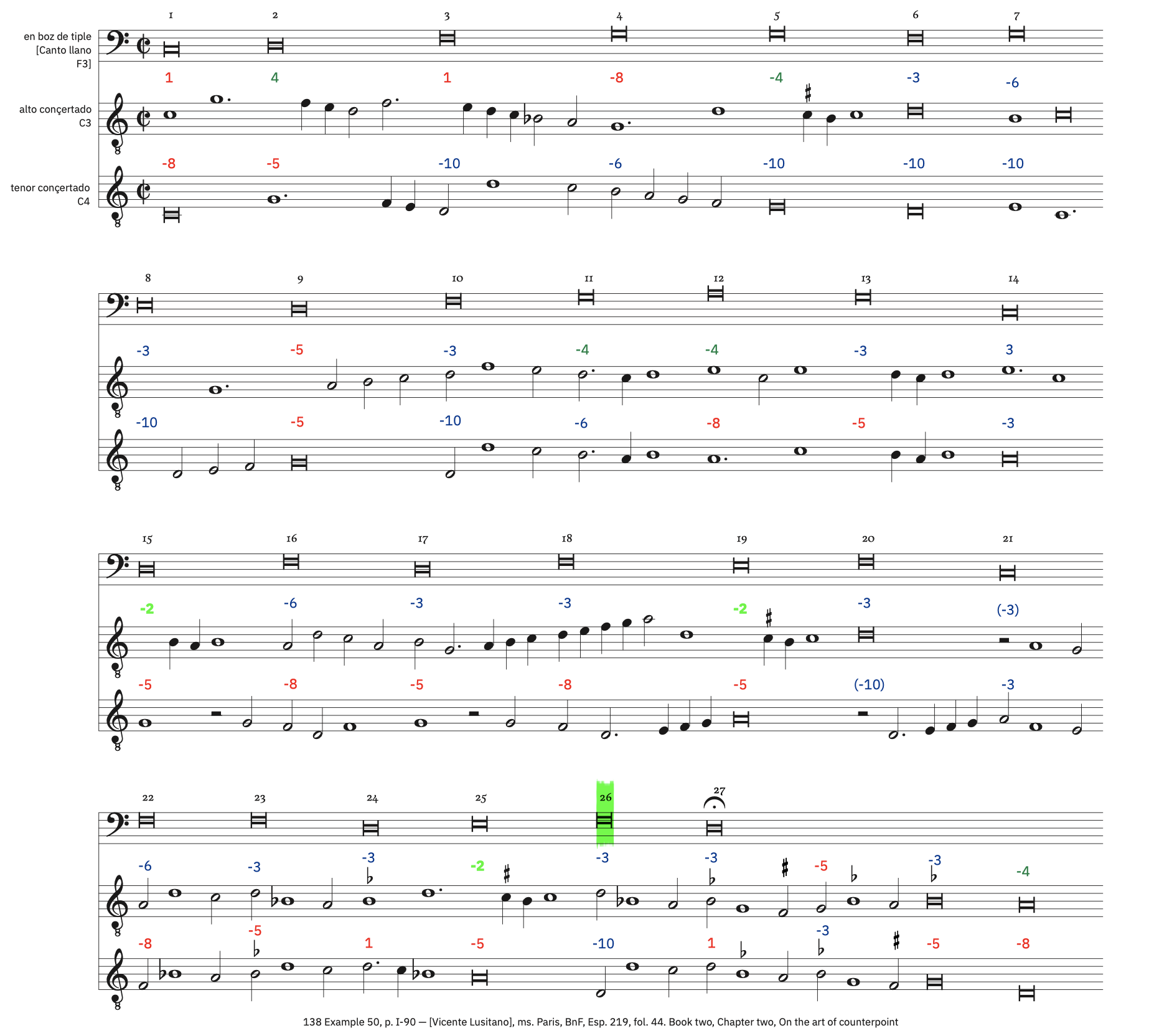
[Ex. 50] Exemplo
[pen-]ultimate figure of the plainchant.
[Ex. 50] Example[^*]
dernière note du plain-chant.
[Ex. 50] Exemple
138 Ex. 50[^*]
[Marg. Nota]
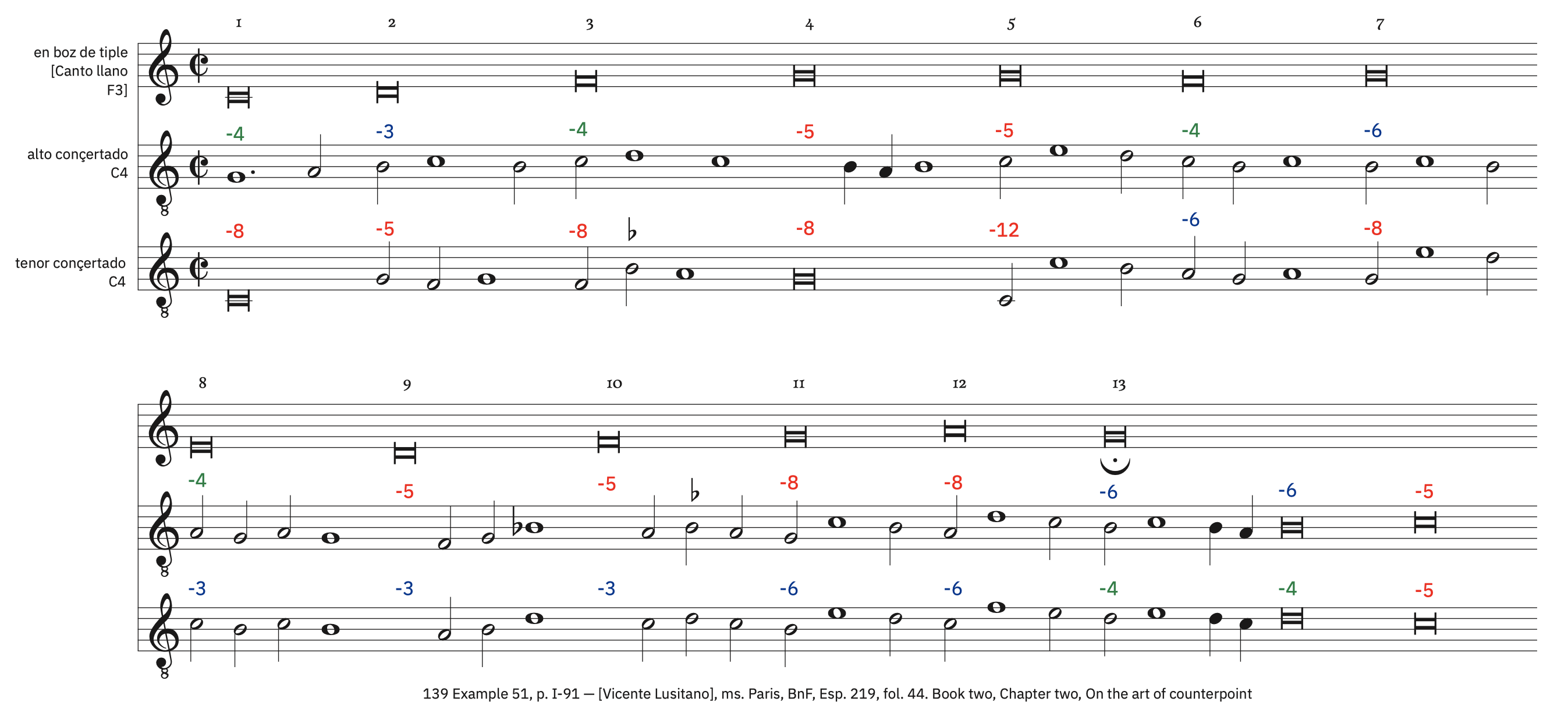
Estas dos bozes muestran algunas clausulas y mas ligaduras que las pasadas; las quales ligaduras van en una boz con el canto llano, mas la segunda boz va sienpre en terçeras con la que haze las ligaduras con el canto llano, como pareçe abaxo.
[Ex. 51] Exemplo
[Marg. Note]
These two voices show some cadences and more suspensions than the previous ones; these suspensions are done in one voice with the plainchant, but the second voice goes always in thirds with the one carrying the suspensions with the plainchant, as shown below.
[Ex. 51] Example [^**]
[ Marg. Remarque]
Ces deux voix montrent quelques cadences et davantage de retards que les précédentes ; ces retards se font à une voix avec le plain-chant, mais la deuxième voix va toujours en tierces avec celle qui fait les retards, comme il apparaît ci-dessous.
[Ex. 51] Exemple
139 Ex. 51[^**]
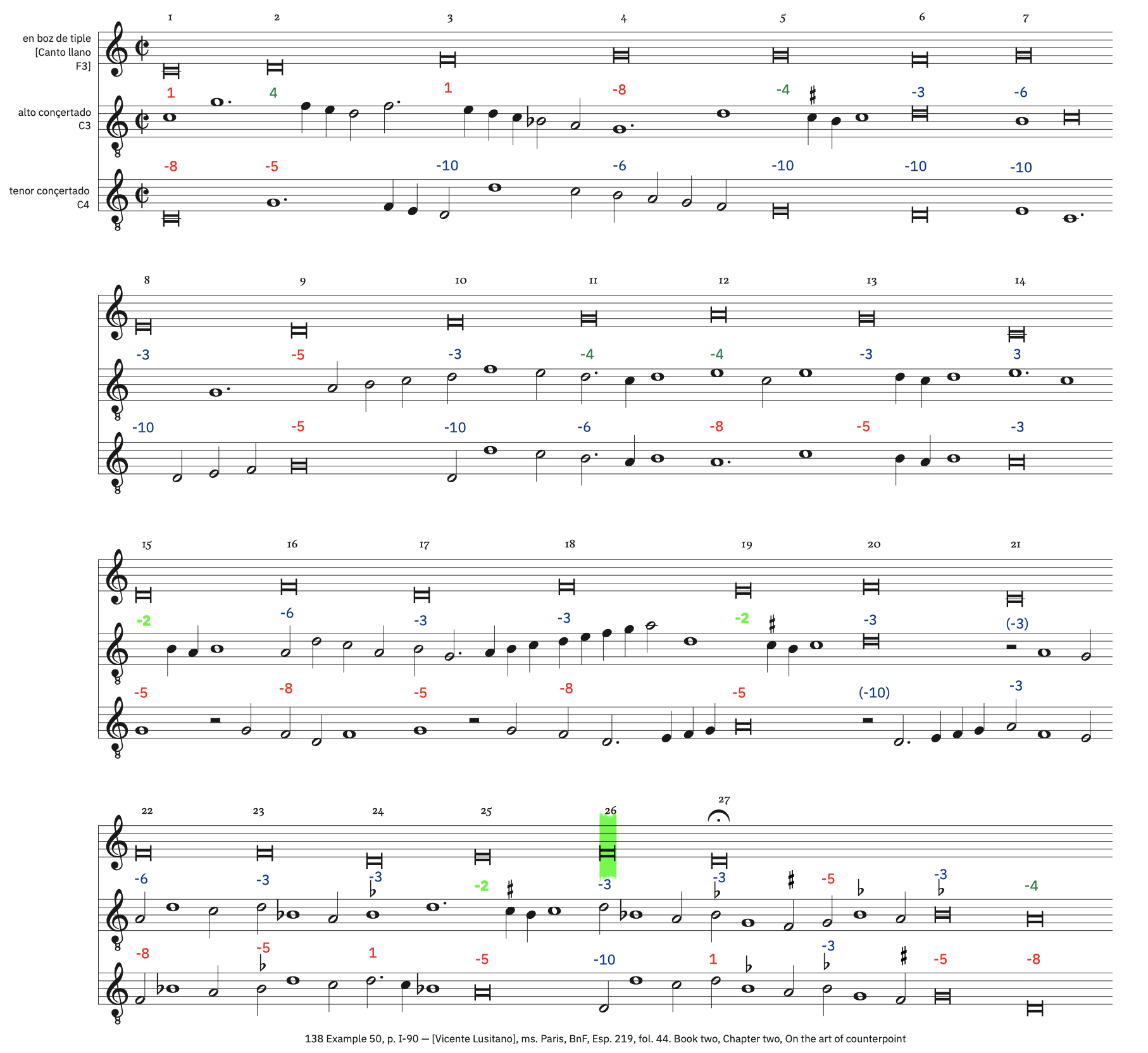
[^*]: [See below for another version of Example 50. The cantus firmus is transposed one octave up, as it is intended to sound. It also facilitates visualisation of the actual intervals—Tr.]
138 Ex. 50b
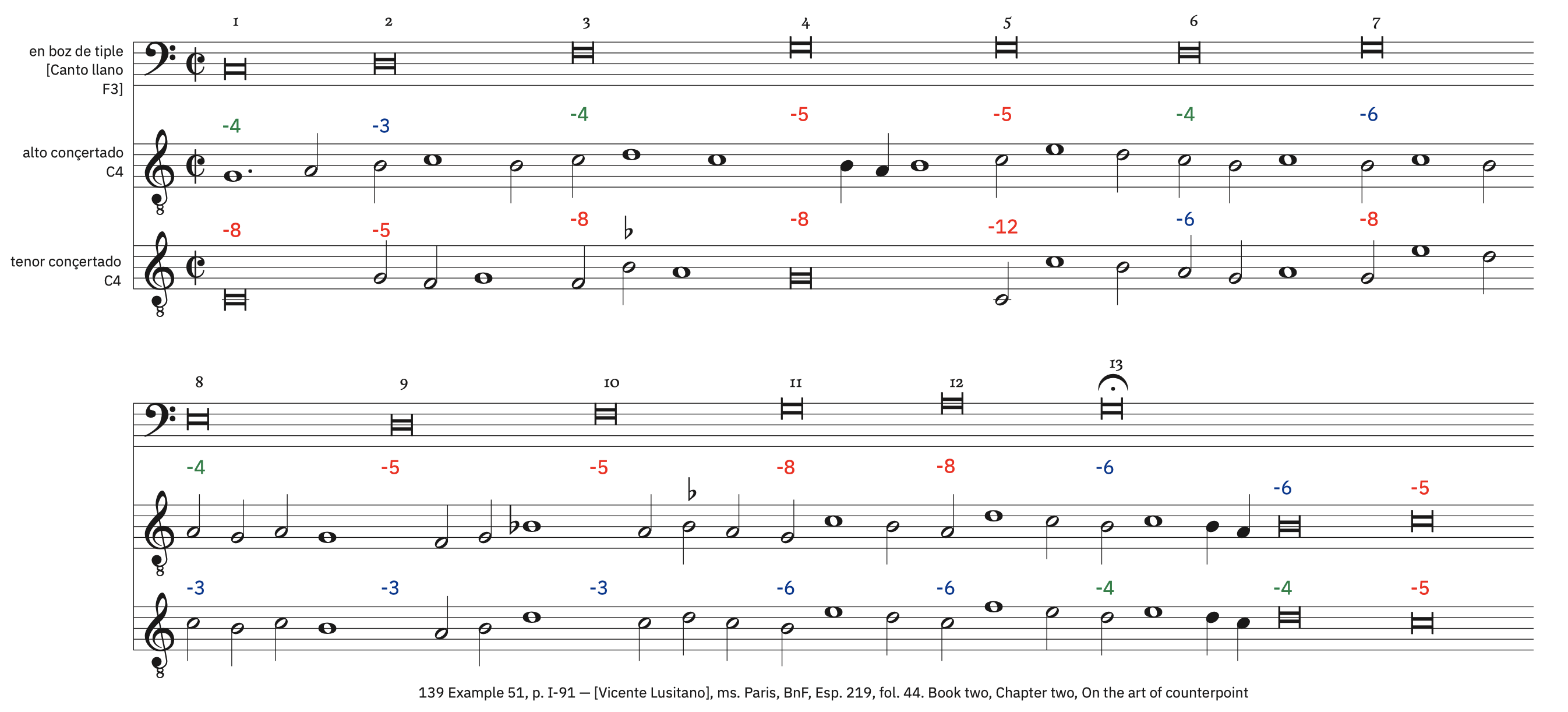
[^**]: [See below for another version of Example 51. The cantus firmus is transposed one octave up, as it is intended to sound. It also facilitates visualisation of the actual intervals—Tr.]
139 Ex. 51b