fol. 30v
Book two, chapter one: On the art of counterpoint
…un paso, aonque sea diferente; el qual se puede hazer siendo mixtion de bequadro y bemol, con tal que siempre diga el paso sin interponer otro alguno, como abaxo se vera.
[Ex. 25a-c] Exemplo
…a motive, even if with some changes; this can be done by mixing natural and soft [hexachords], provided that you use the motive without interposing any other, as we will see below.
[Ex. 25a-c] Example
…un motif de la même façon, bien qu’il soit différent ; cela peut se faire en mélangeant les bécarres et les bémols à condition de dire toujours la même chose sans jamais intercaler rien d’autre, comme on le verra ci-dessous.
[Ex. 25a-c] Example
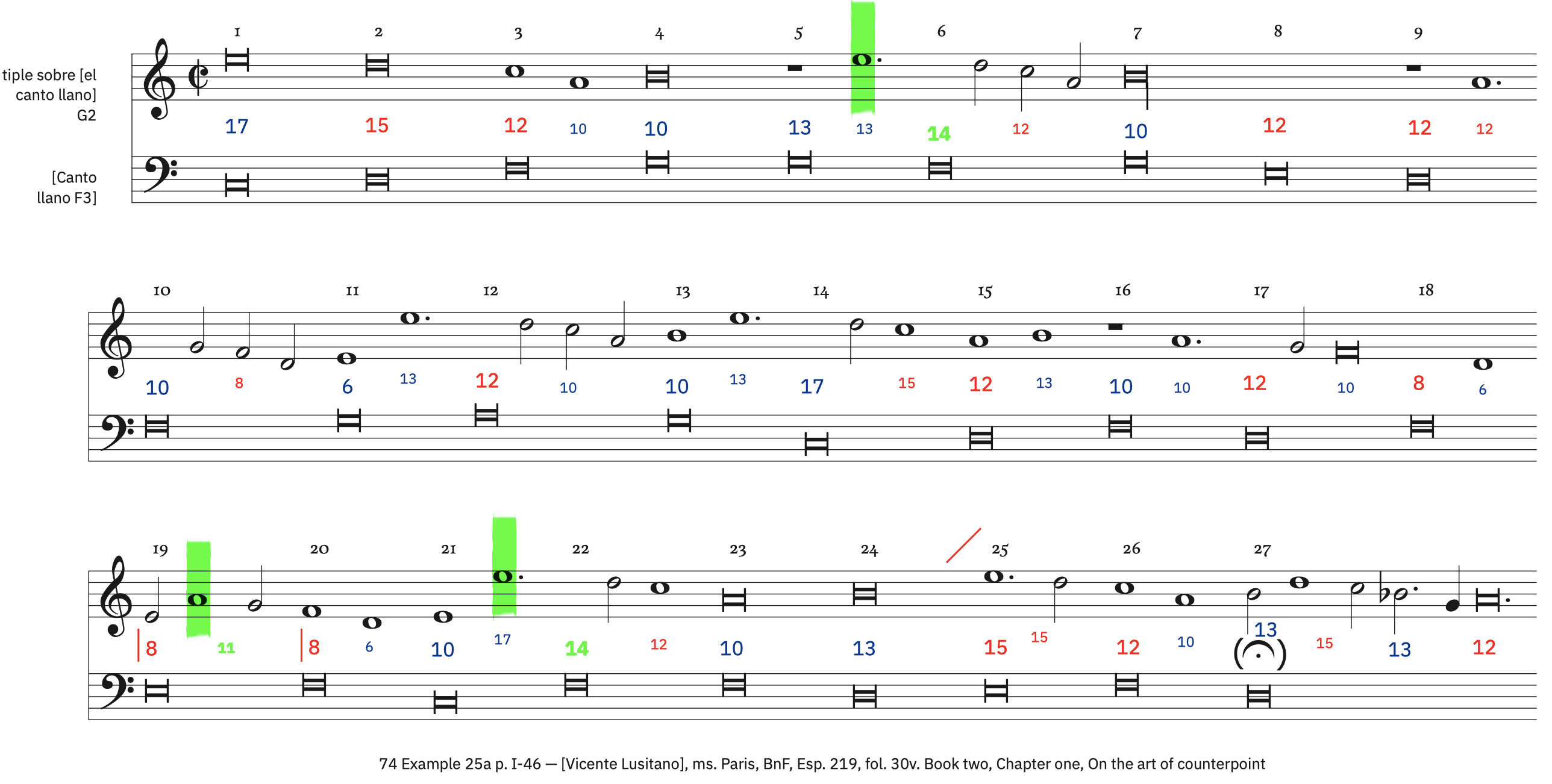
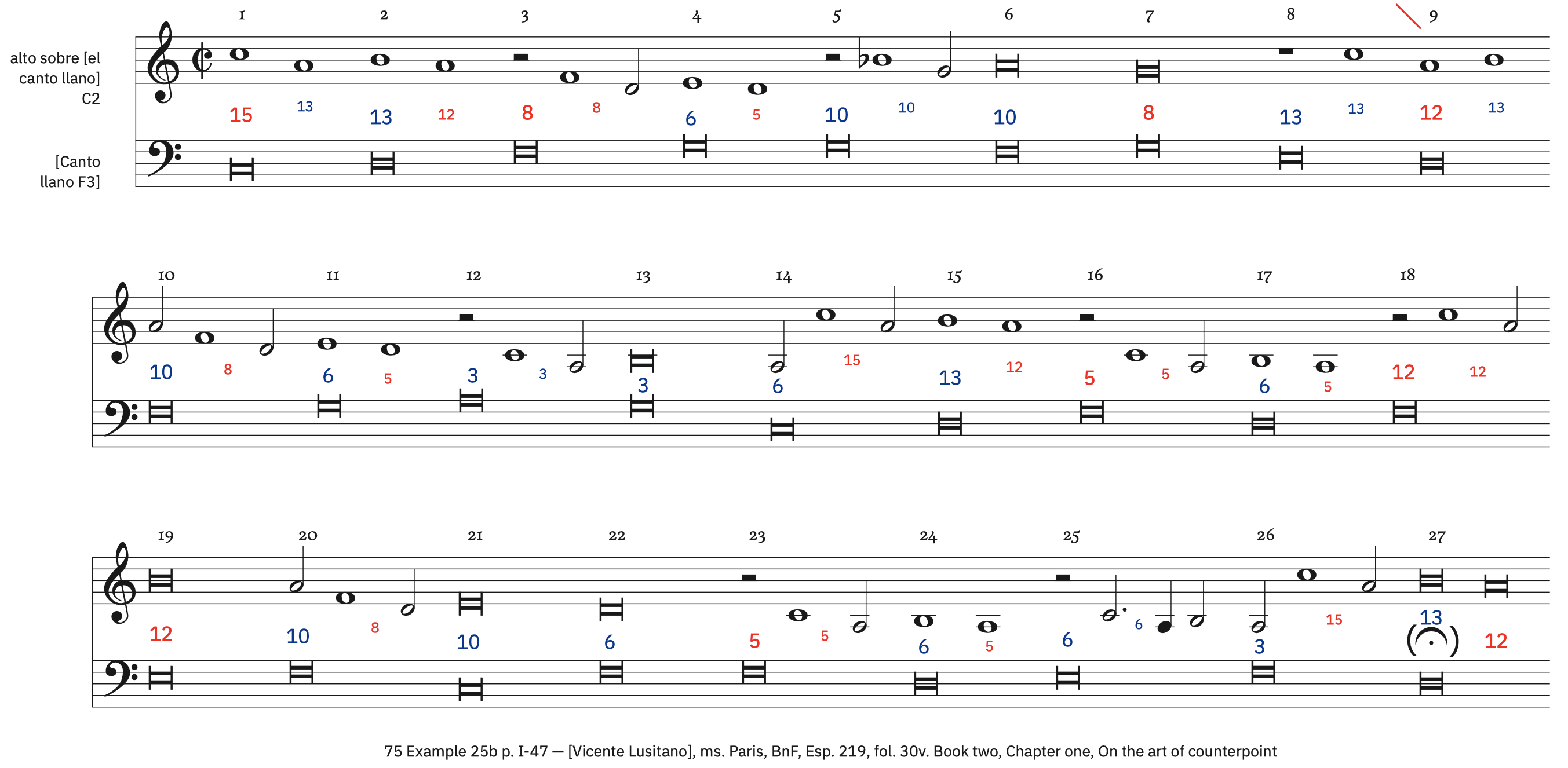
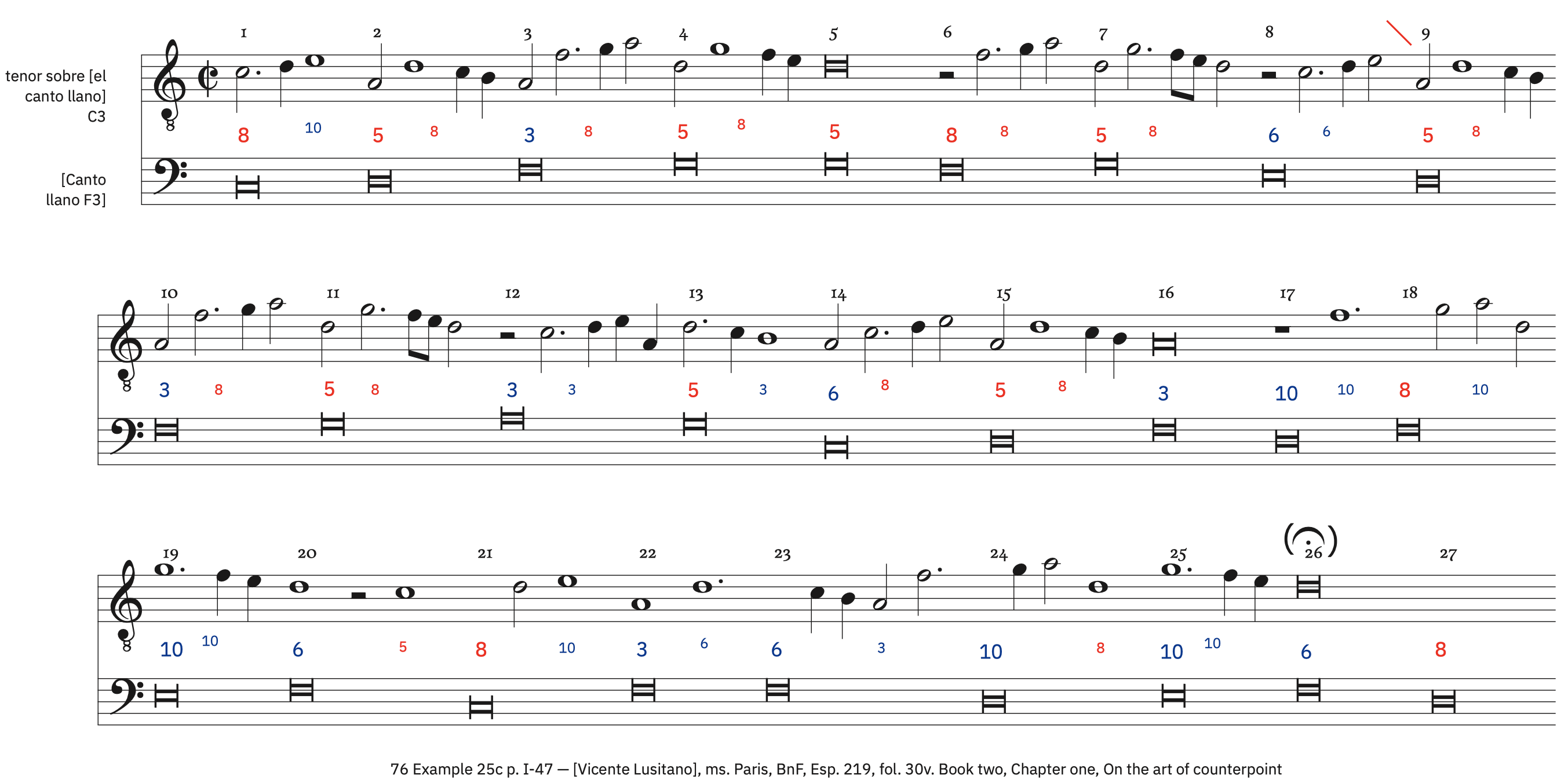
[Marg: Monstrase en este tenor la forma de echar dos passos forçados, por que fa sol la re es un passo, y sol fa mi re es otro, o re sol fa mi re es otro passo. Esto mismo se vee en este baxo, adonde todo puede ser un passo y pueden ser dos].
[Marg: In this tenor we show how to make two ostinato motives, as fa sol la re is one pattern, and sol fa mi re or re sol fa mi re is another. There is a similar case in the bass below, in which we can consider it as one or as two patterns.]
[ Marg. On montre dans ce ténor comment former deux motifs obstinés, parce que fa sol la re est un motif, et sol fa mi re en est un autre, ou re sol fa mi re un autre. On voit la même chose dans la basse ci-dessous, où l’on peut considérer le tout comme un seul motif ou comme deux].
77 Ex. 25d[^*]
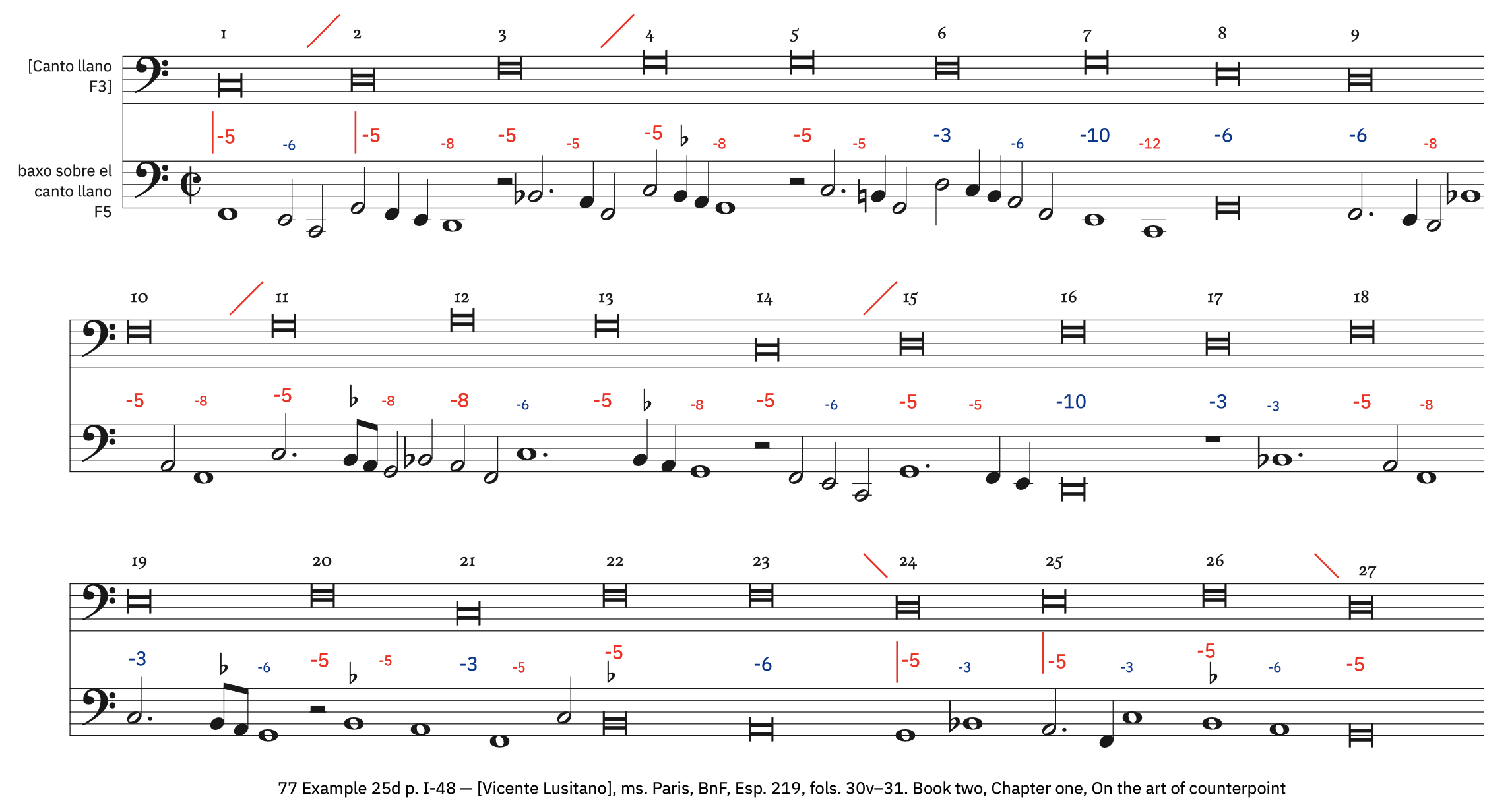
[^*]: [Only the first of the two staves of Example 25d is notated at the bottom of folio 30v. The second stave appears at the top of folio 31 in the manuscript.—Tr.]