fol. 53r
Book two, chapter four: Counterpoint on mensural music
190 Ex. 67e[^*]
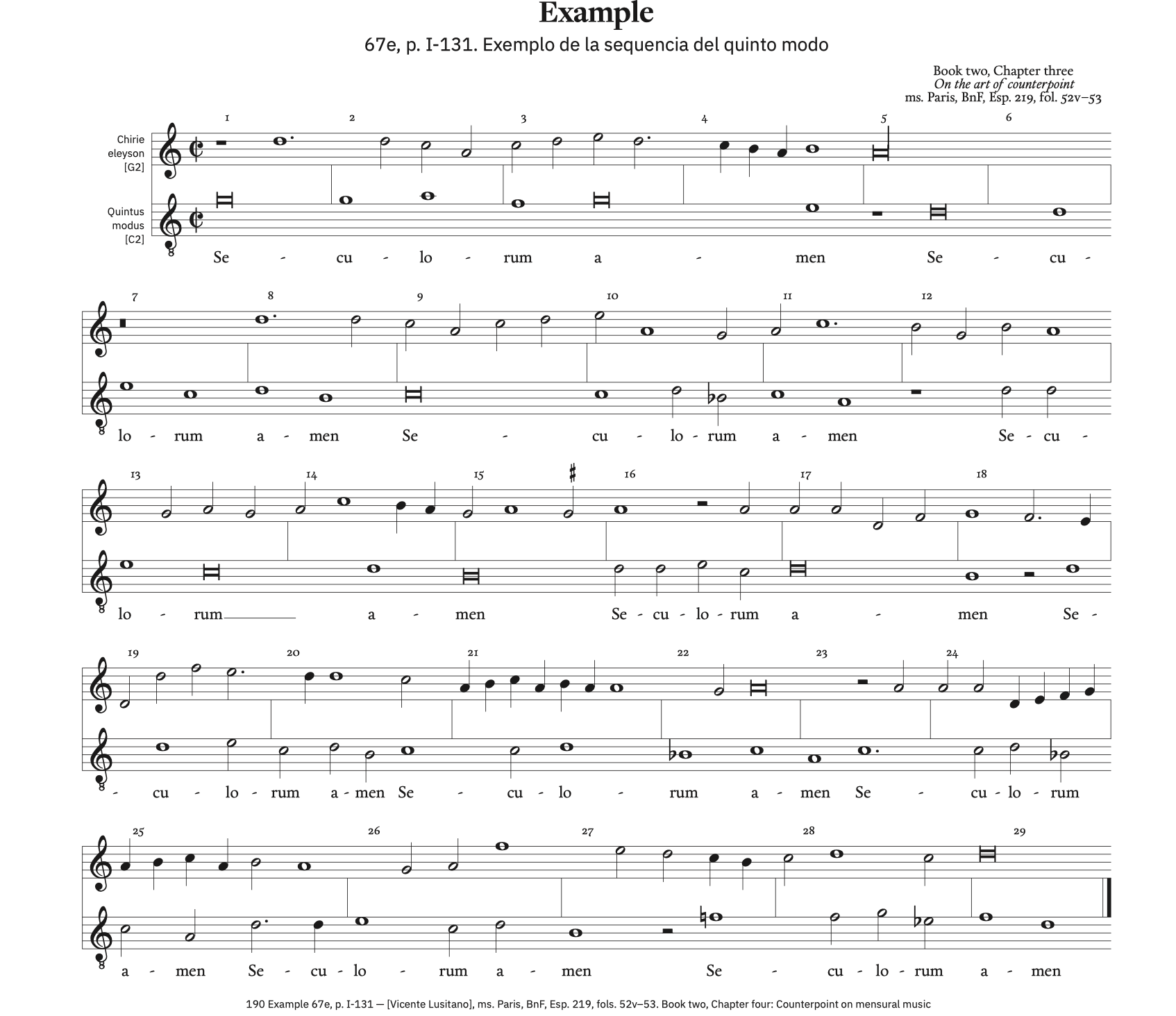
Exemplo de la sequencia del sexto modo, sobre el Chirie. Seculorum amen [Marg. sextus modus]
Example of the psalmodic differentia of the sixth mode, on the Kyrie. Seculorum amen [Marg. sixth mode]
exemple de la différence du sixième ton sur le Kyrie. Seculorum amen [ Marg. Sixième ton]
191 Ex. 67f[^**]
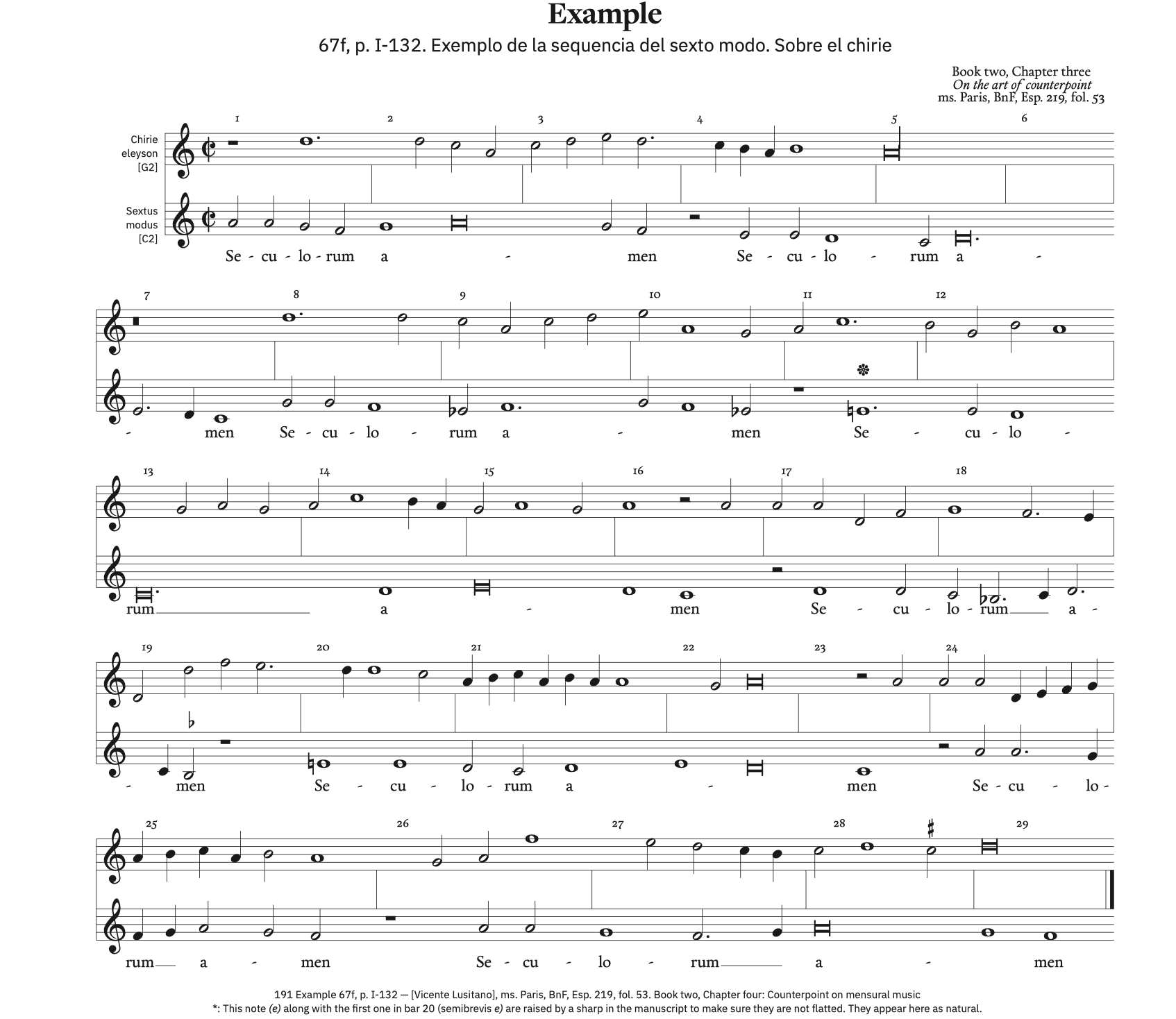
Exemplo de la sequencia del septimo modo, sobre el Chirie. Seculorum amen [Marg. septimus modus]
Example of the psalmodic differentia of the seventh mode, on the Kyrie. Seculorum amen [Marg. seventh mode]
exemple de la différence du septième ton sur le Kyrie. Seculorum amen [ Marg. Septième ton]
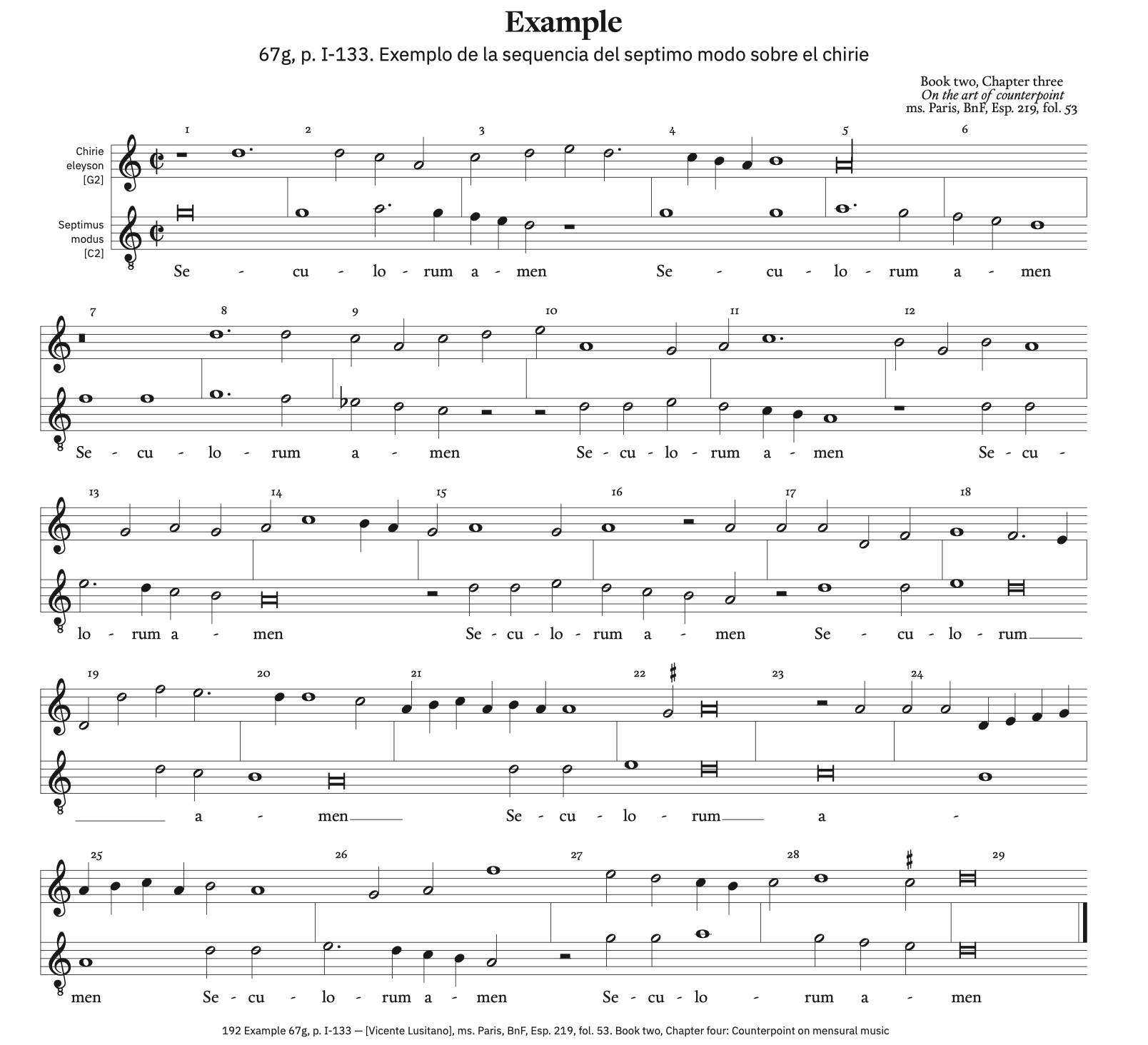
Exemplo de la sequencia del octavo modo, sobre el Chirie. Seculorum amen [Marg. octavus modus]
Example of the psalmodic differentia of the eighth mode, on the Kyrie. Seculorum amen [Marg. eighth mode]
exemple de la différence du huitième ton sur le Kyrie. Seculorum amen [ Marg. Huitième ton]
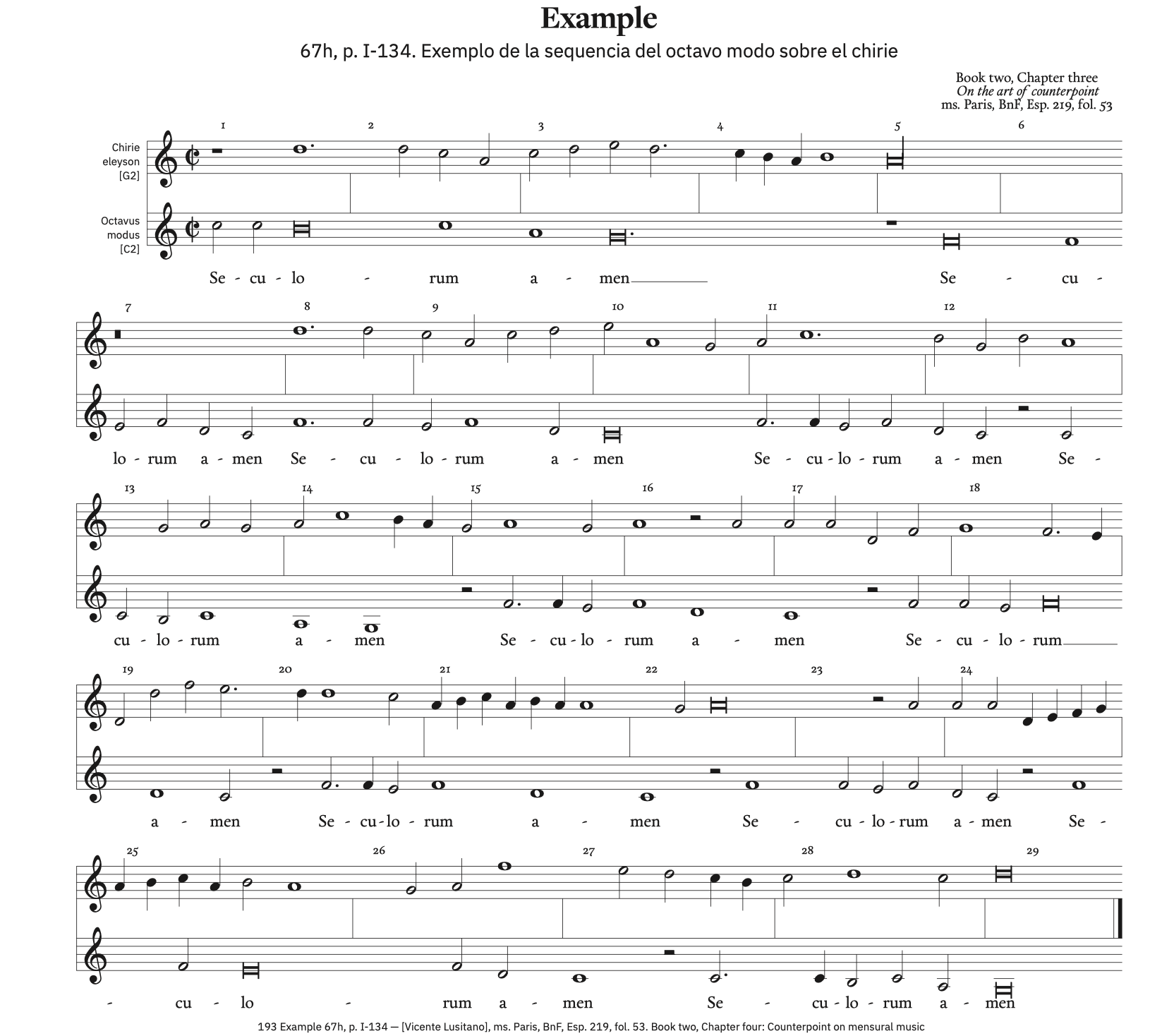
Algunas destas abilidades sobre el libro se muestran perfetamente, lo qual en escrito no se puede hazer, y por eso aquellas que sin el libro no se pueden mostrar dexaremos, y las que comodamente sin el se mostraran quanto a nuestra flaqueza: sub corectione melioris iudicii.
Some of these skills are perfectly shown upon the book, which cannot be done in writing; therefore, we will leave aside those that cannot be demonstrated without the book, and deal with those that can be easily shown without it to the extent of our weakness: sub corectione melioris iudicij.
Certaines de ces habiletés sont parfaitement montrées sur le livre, mais ne peuvent se faire par écrit ; c’est pourquoi nous laisserons de côté celles qu’on ne peut montrer sans le livre, et nous traiterons de celles que l’on pourra montrer facilement sans lui. Quant à notre ignorance, sub corectione melioris iudicij.
[^*]: [Example 67e started at the bottom of folio 52v, ending at the top part of folio 53. However, it appears again here for the sake of completeness—Tr.]
[^**]: [The dotted semibreve (e) in bar 11 along with the first note in bar 20 (semibreve e) are raised by a sharp in the manuscript to make sure they are not flatted. They appear here as natural.—Tr.]