fol. 44 bis*
Book two, chapter three: On canons
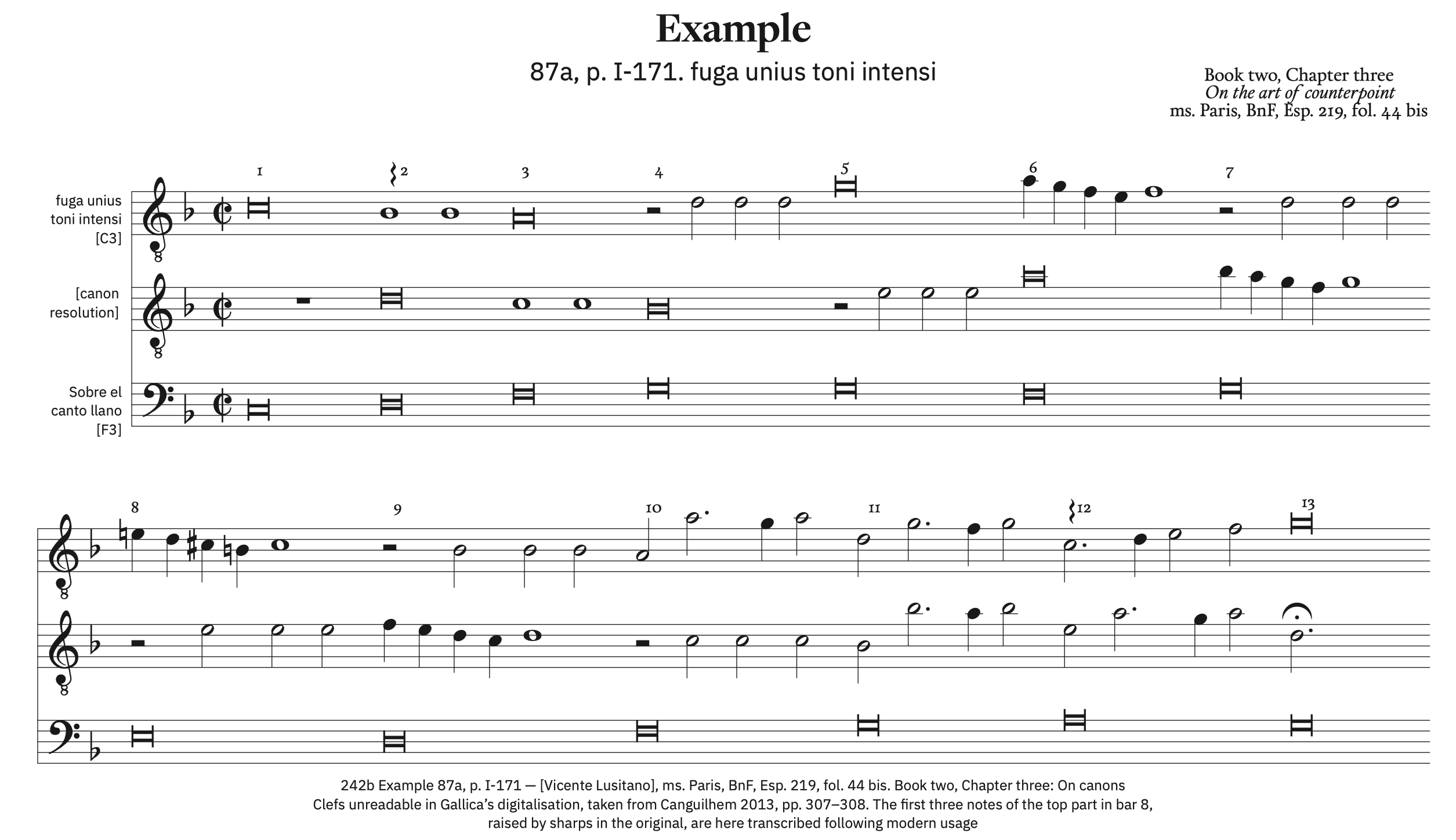
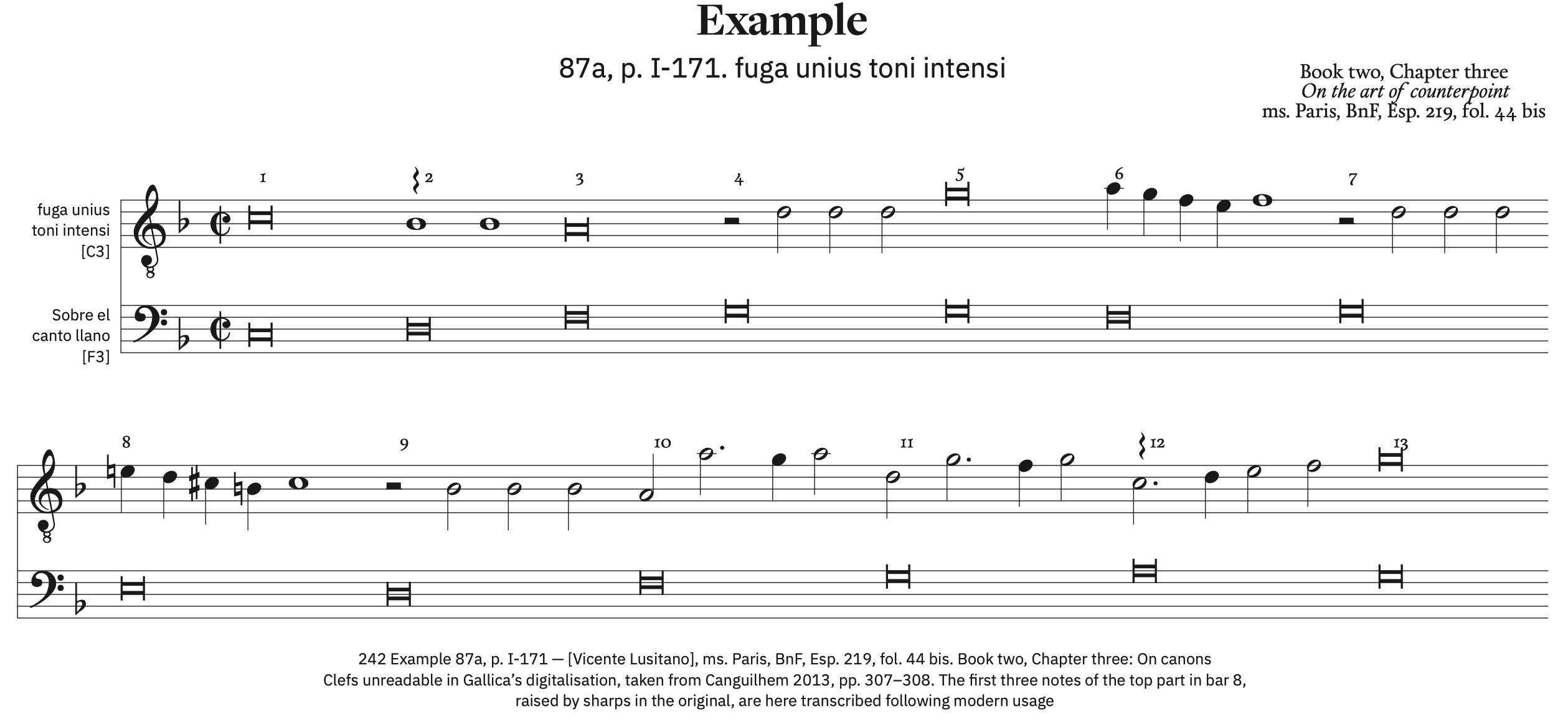
fuga unius toni intensi
Canon at the upper second [fuga unius toni intensi]
Canon au ton supérieur
242 Ex. 87a[^*]
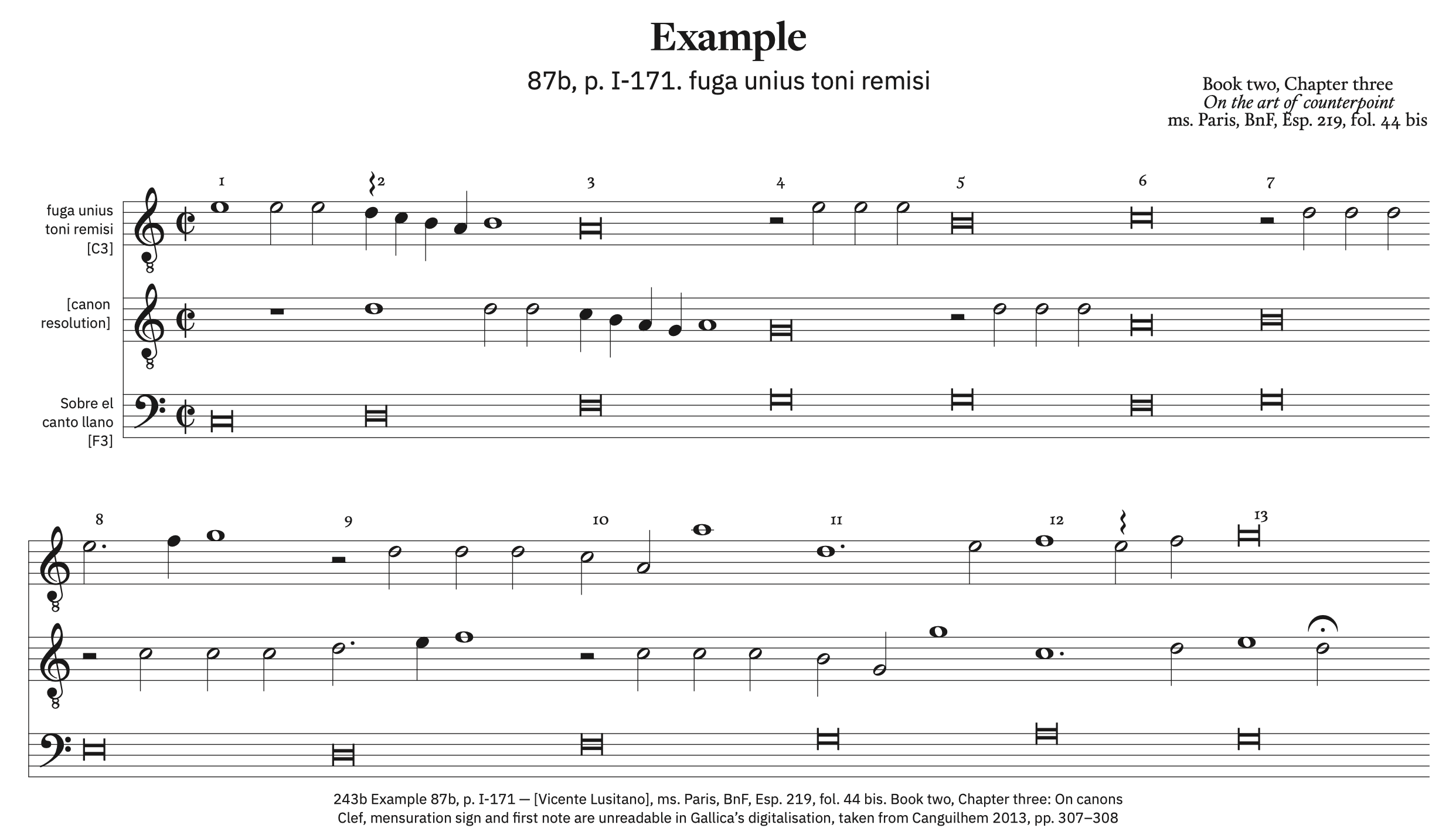
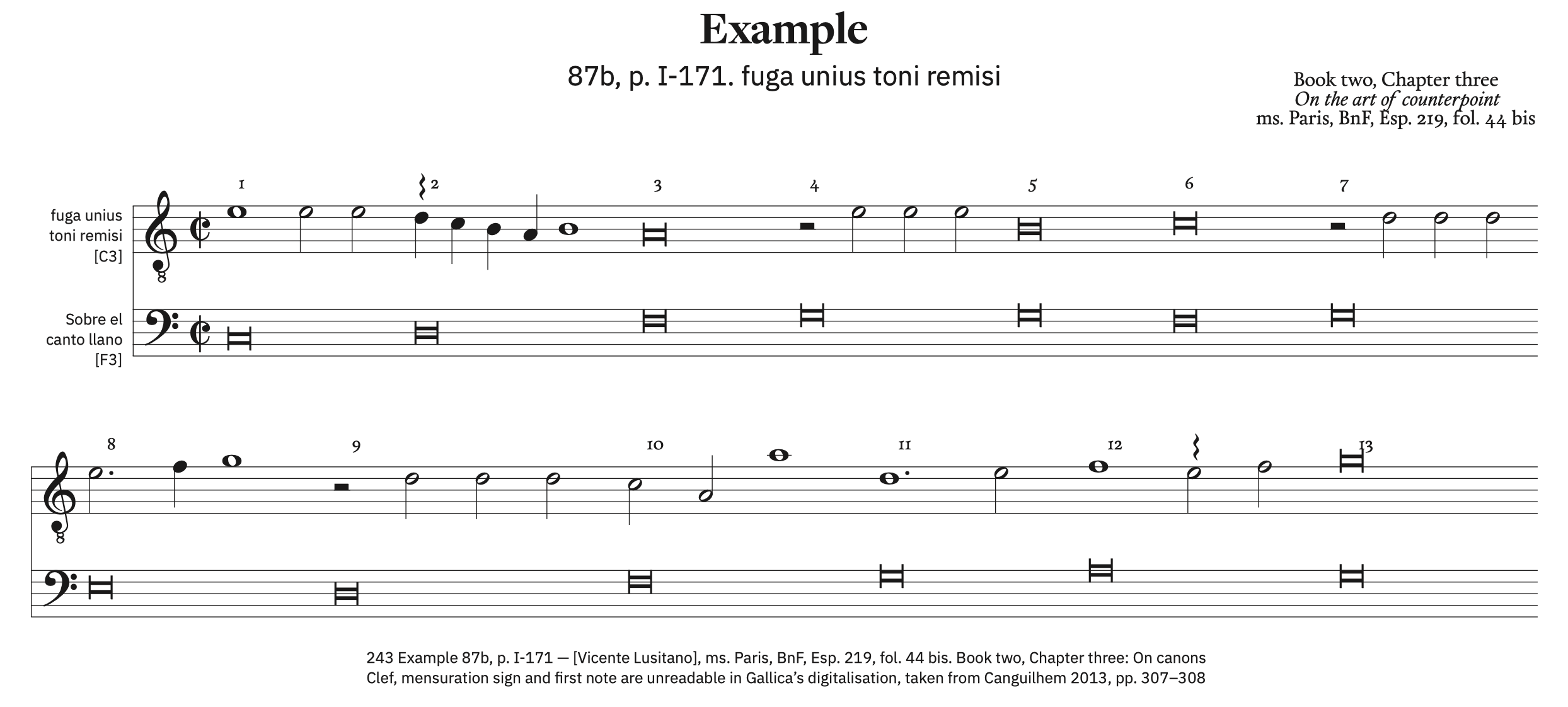
fuga unius toni remisi
Canon at the lower second [fuga unius toni remisi]
Canon au ton inférieur
243 Ex. 87b[^*]
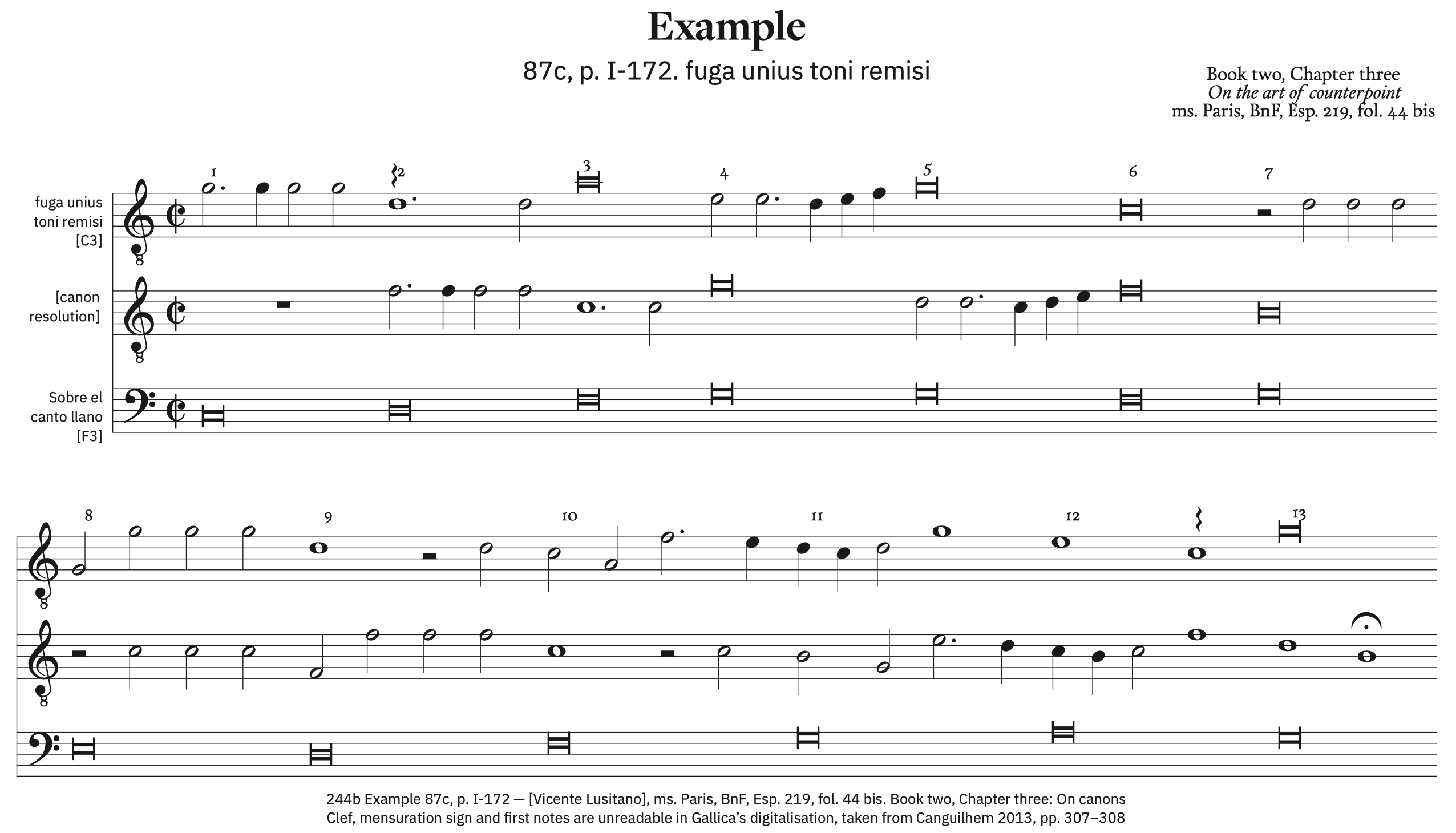
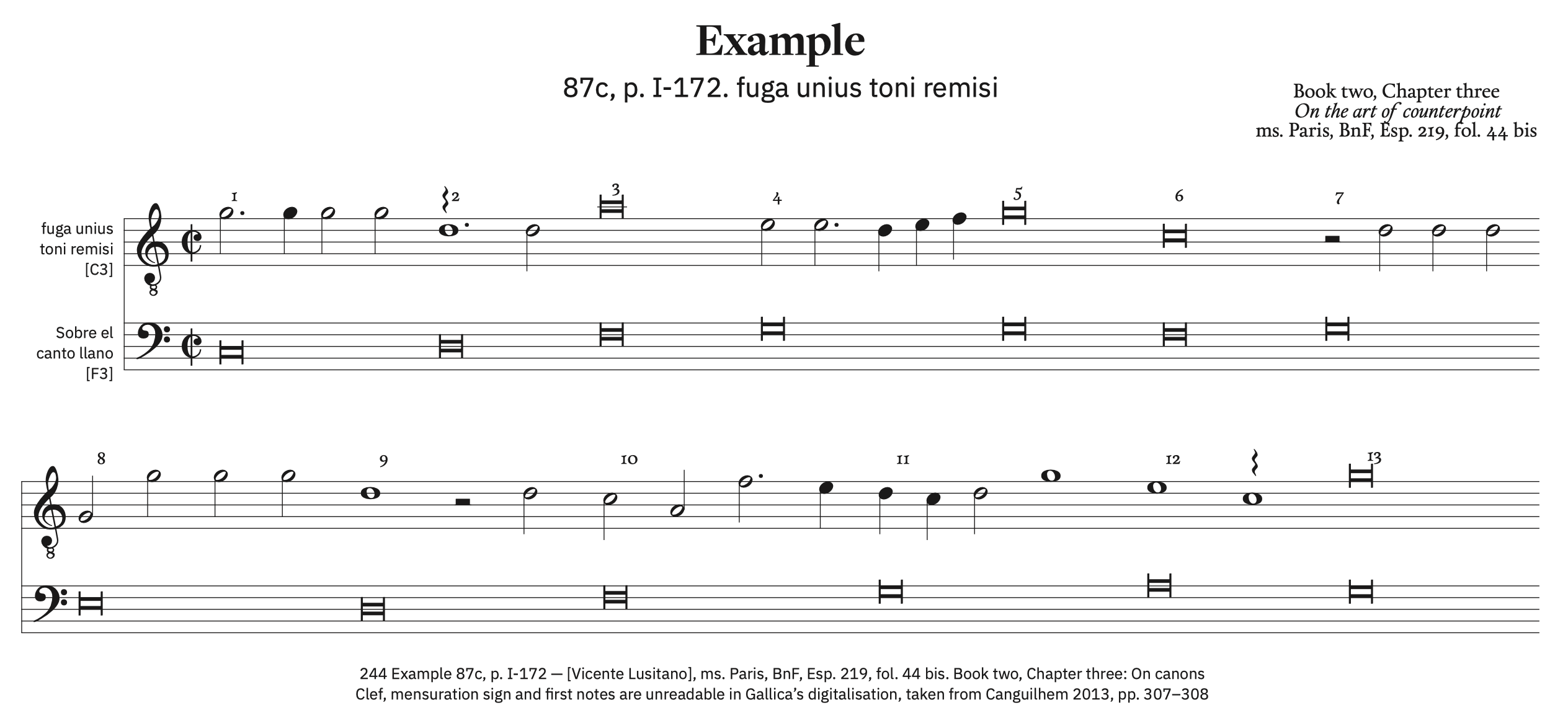
fuga unius toni remisi
Canon at the lower second [fuga unius toni remisi]
Canon au ton inférieur
244 Ex. 87c[^*]
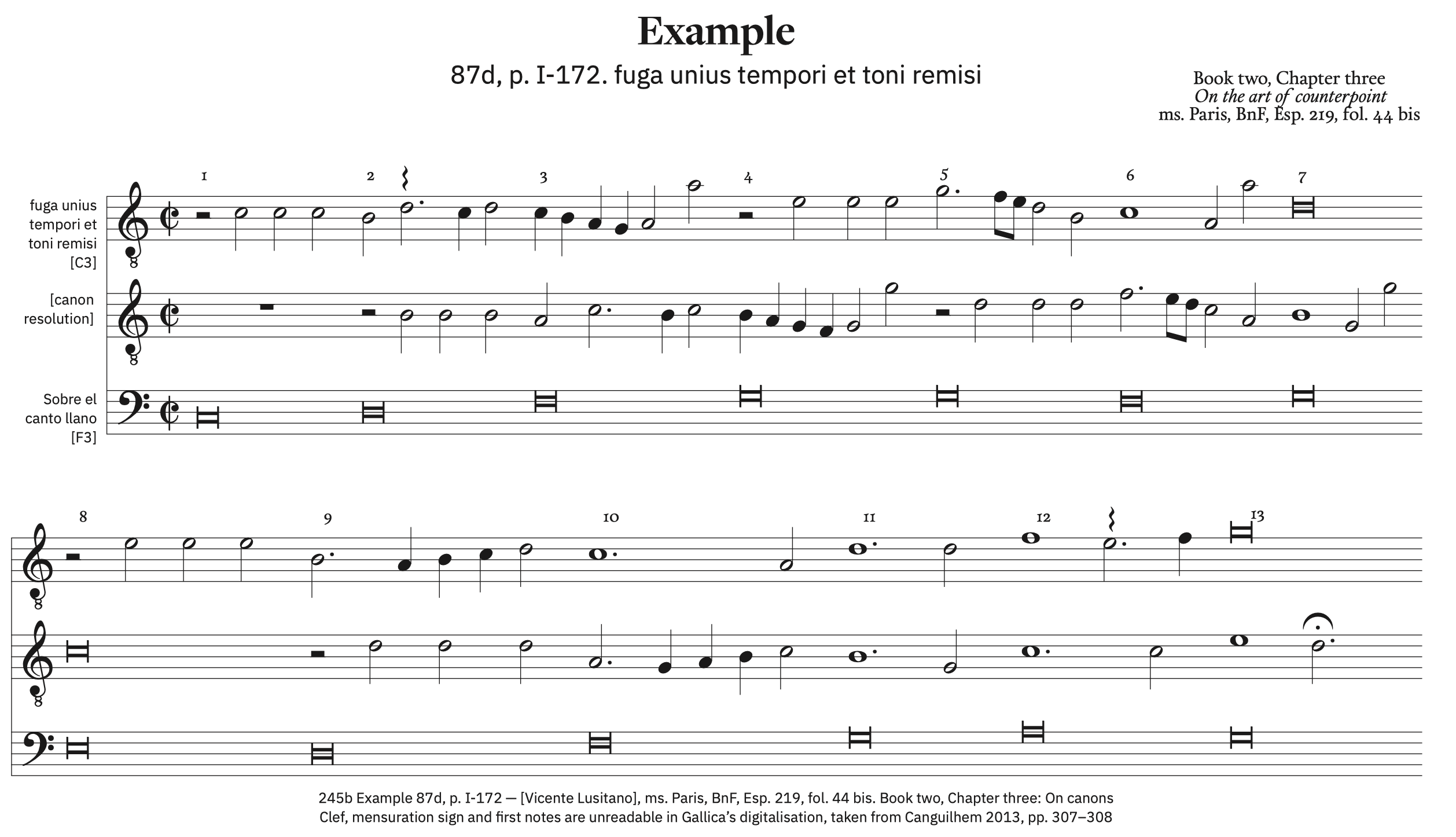
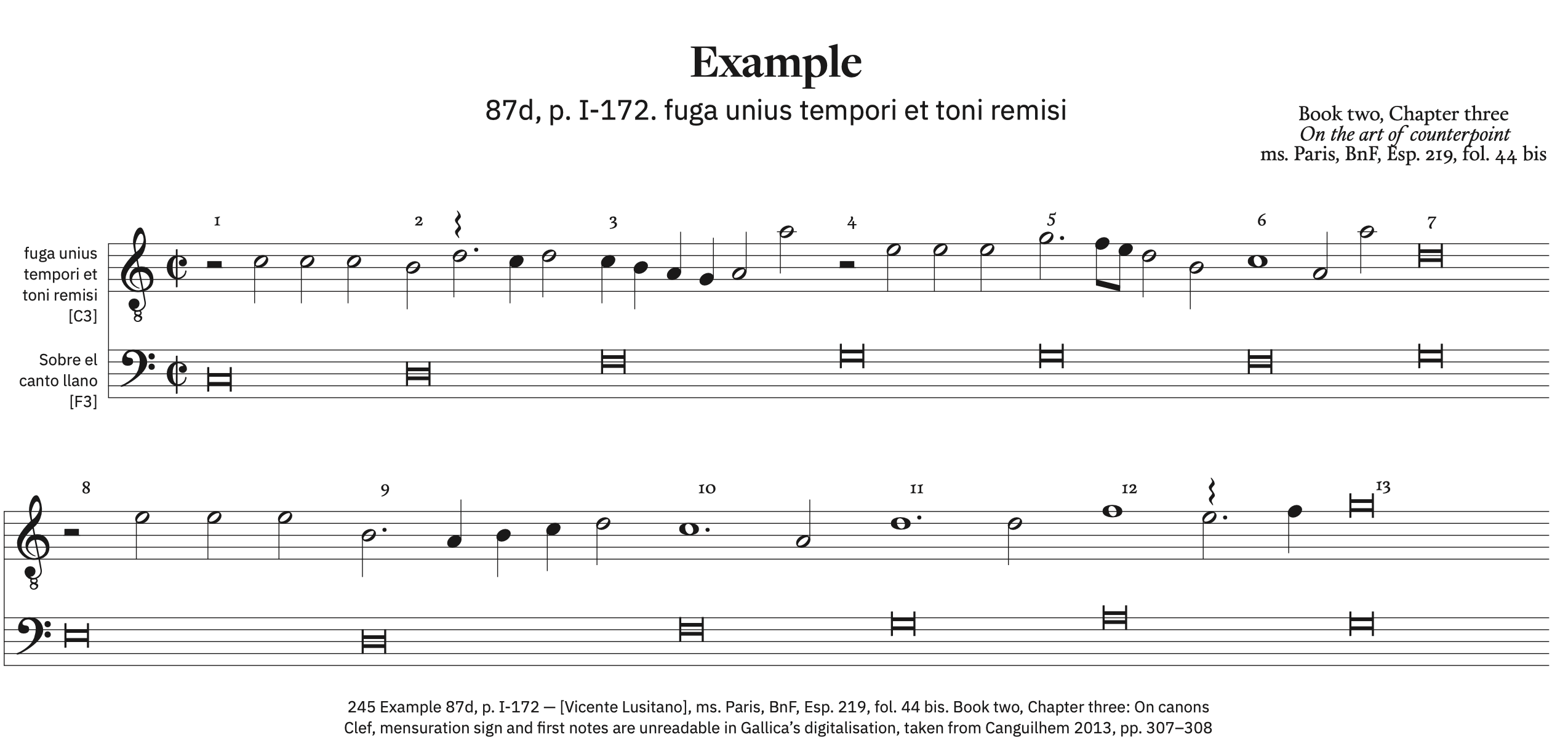
fuga unius tempori et toni remisi
Canon at the lower second after a breve rest [fuga unius tempori et toni remisi]
Canon au ton inférieur avec une pause de brève
245 Ex. 87d[^*]
Nota que la 7ª menor es hecha de dos sesquiterçias o diatesarones y por esso es apta a la composision, y la nona maior de dos sesquialteras o diapentes y por esso apta a la composision. Mas la 7ª maior es hecha de un tritono y un diatesaron, y la nona menor menor [sic] de un diapente y un sin diapente y por esso non se deven admitir en la composision.
Note that the minor seventh is made up of two sesquiterçias or diatessarons [fourhts], and for this reason, it is suitable for composition. And that the major ninth is made up of two sesquialteras or diapentes [fifths], and for this reason is also suitable for composition. But the major seventh is made of a tritone and a diatessaron, and the minor ninth of a diapente and a syndiapente [imperfect fifth]. For this reason, they should not be accepted in composition.
Remarquez que la septième mineure est faite de deux sesquitierces ou diatessarons, et pour cela, elle convient à la composition; et que la neuvième majeure est faite de deux sesquialtères ou diapentes et pour cela convient également à la composition. Mais la septième majeure est faite d’un triton et d’un diatessaron, et la neuvième mineure d’un diapente et d’un syndiapente, et pour cela, elles ne doivent pas être acceptées dans la composition.
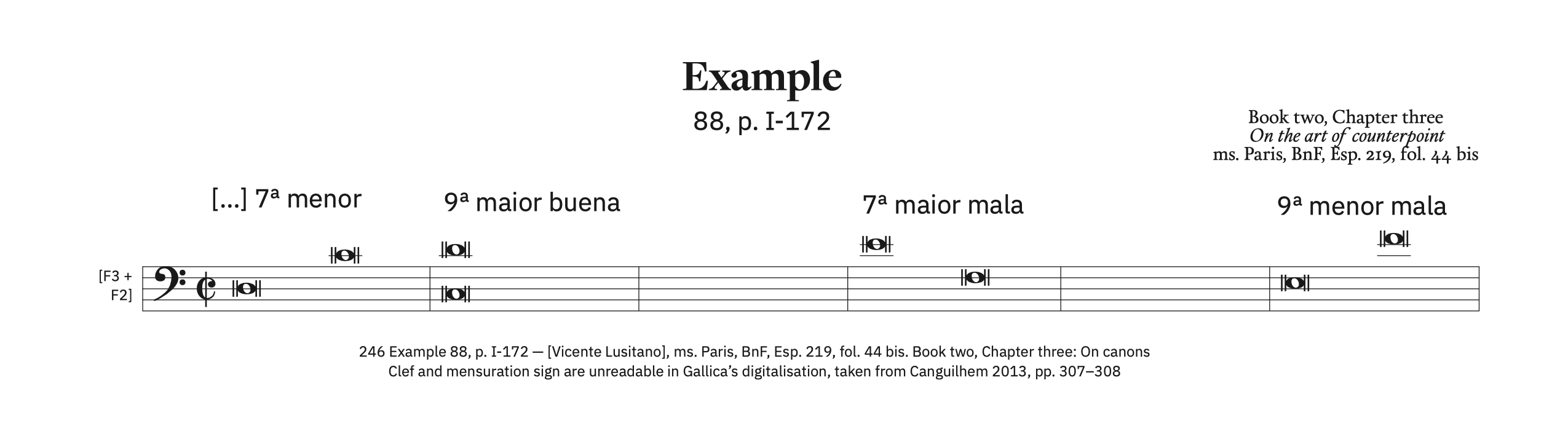
*: [Folio 44 bis was inserted a posteriori during the binding process. For this reason, it appears as an appendix in Canguilhem’s 2013 edition (pp. 307–308). Some words and other details from the music examples are completely or partially unreadable in Gallica’s digitalisation. Therefore, I have taken them from Canguilhem’s edition (2013, pp. 307–308).—Tr.]
[^*]: [Clefs, mensuration signs and first notes and the first notes of each example are unreadable in Gallica’s digitalisation. They have been taken from Canguilhem 2013, pp. 307–308. In example 87a, the first three notes of the top part in bar 8, raised by sharps in the original, are transcribed here following modern usage. See below for another version of examples 87a–d with canon resolutions.—Tr.]
242 Ex. 87a