fol. 26v
Book two, chapter one: On the art of counterpoint
… usa del ayre que deven tener los que algo [f. 26v] mas galano quieren hazer.
[Ex. 19a-d] Exemplo
…it uses the melodic style that should be practised by those who want to do something [f. 26v] more elegant.
[Ex. 19a-d] Example
…elle utilise le style mélodique que doivent pratiquer ceux qui veulent faire quelque chose de [f. 26v] plus élégant.
[Ex. 19a-d] Exemple
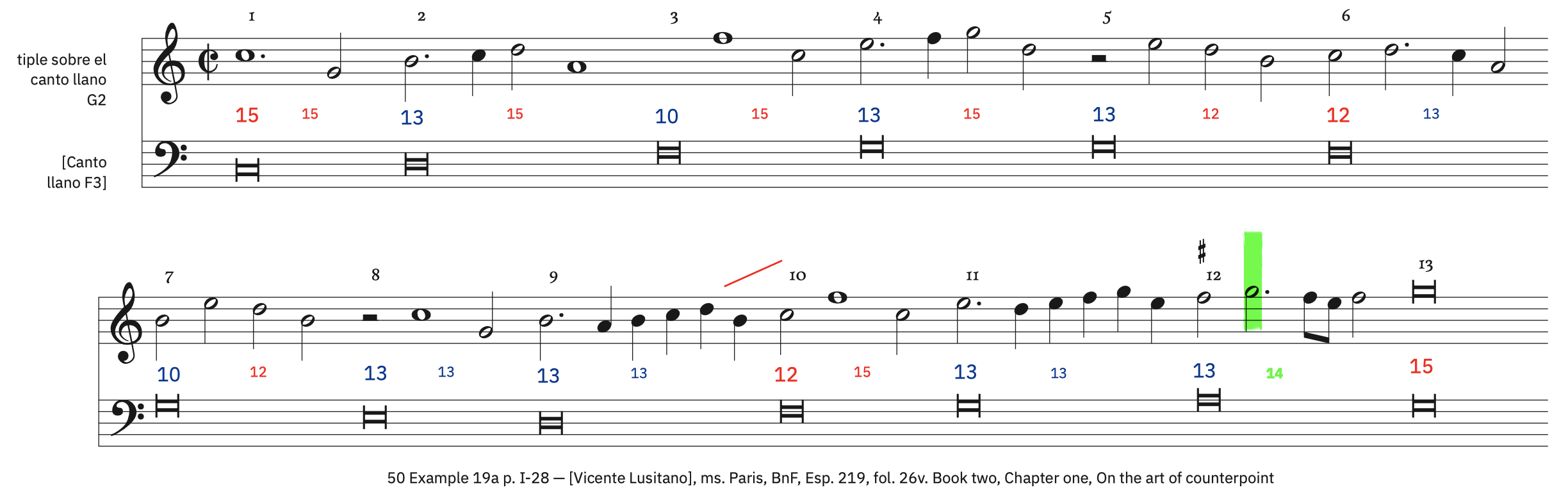
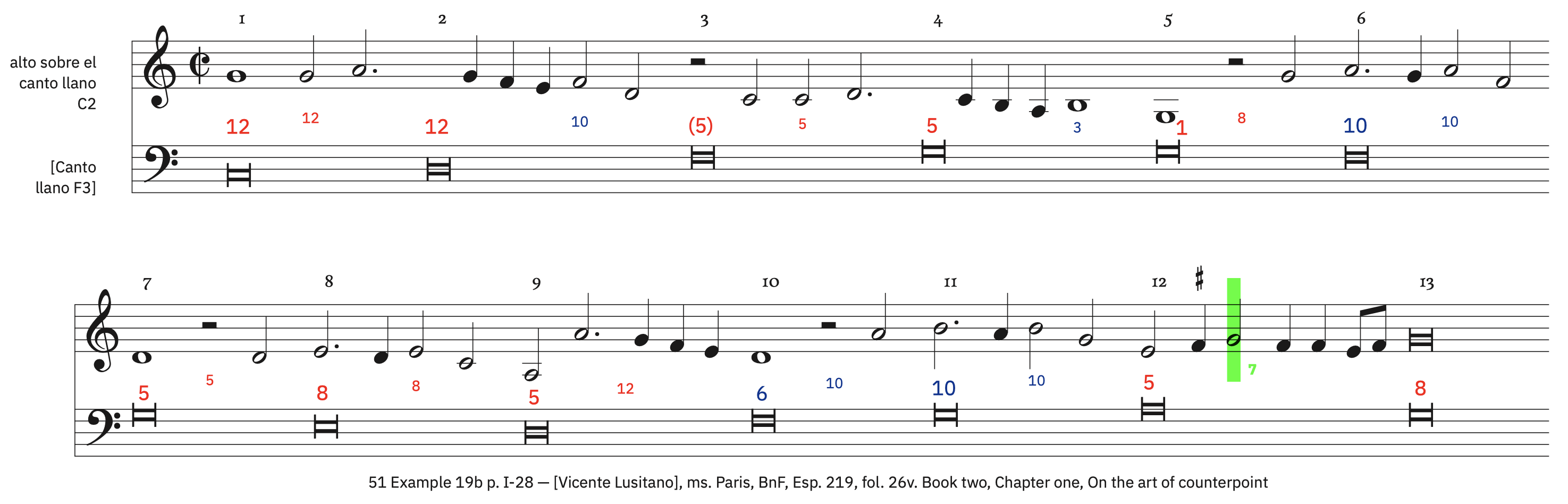
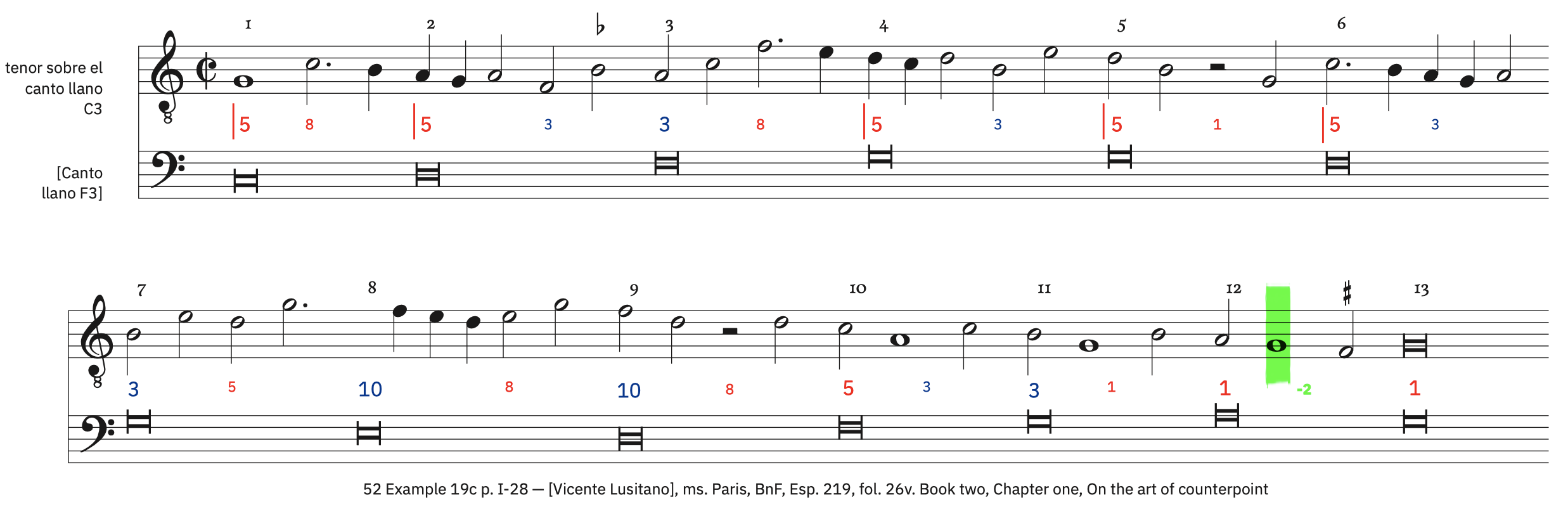
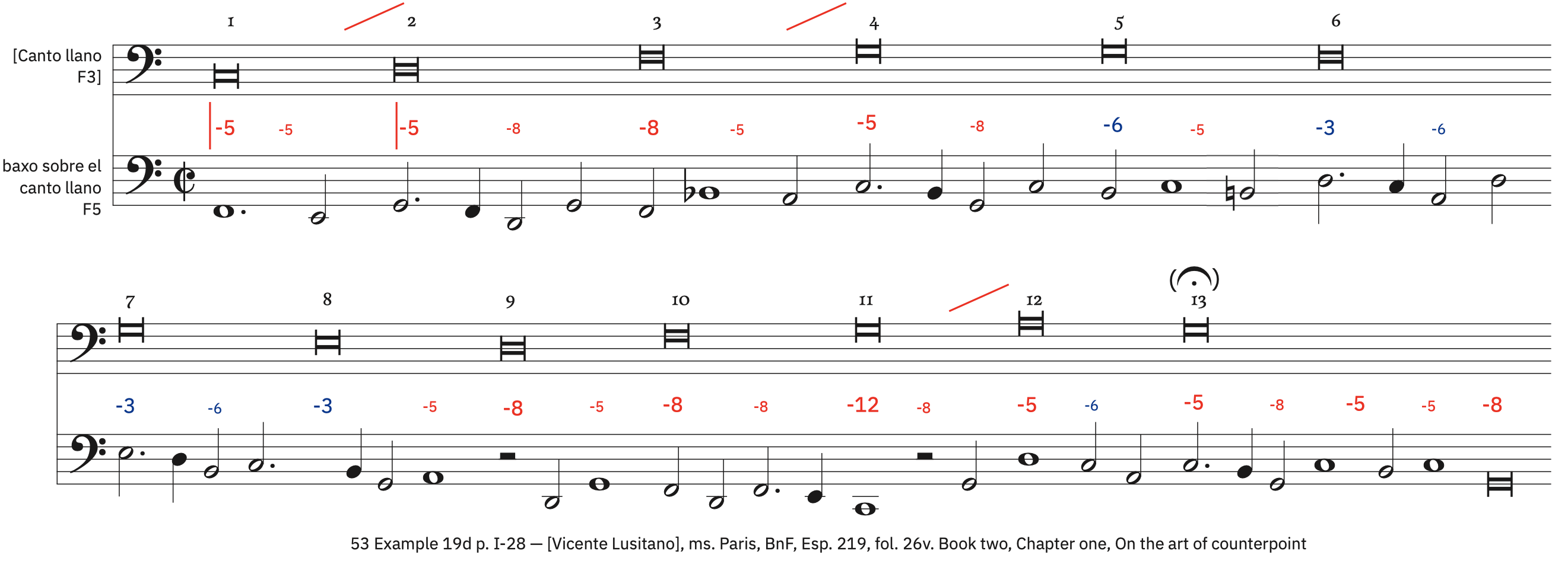
Es de saber que la meior manera que se puede tener en echar el contrapunto es tomar un paso en principio y depues de aver cantado otros pasos tornar al primero como tema, y luego algun paso largo deçendiente o subiente, segun mas conforme fuere visto. Por que algunas vezes viene el paso rodando de tal modo que le conviene mas un paso que otro, lo qual es dexado al bivo yuez, que es la razon. Y no se deve olvidar que los principios sean pacificos, esto es entrando con algun mas reposo, por que pueda ir de grado en grado diminuiendo.
[Ex. 20a] Exemplo
You should know that the best possible way to make a counterpoint is to start with a motive, and after singing other motives, to return to the first as a theme, and then make some passages with great descending or ascending range according to what seems best. Because sometimes a motive loops in such a way that it is better suited to one passage than another, which is left to a wise judge, which is reason. And we must not forget that beginnings be quiet, which means starting slowly so that we can progress gradually by introducing shorter note values.
[Ex. 20a] Example[^*]
Il faut savoir que la meilleure façon possible de faire un contrepoint est de prendre un motif mélodique au début, et après avoir chanté d’autres motifs, de revenir au premier comme thème, et ensuite de faire quelques passages de grand ambitus descendants ou ascendants conformément à ce qui a été vu. Parce qu’il arrive parfois qu’un motif roule d’une telle façon qu’il est préférable d’en prendre un autre, ce qui est laissé à la raison qui est bon juge. Et l’on ne doit pas oublier de faire les débuts calmement, à savoir en commençant lentement, afin de pouvoir progresser par paliers avec des diminutions.
[Ex. 20a-d] Exemple
[^*]: [Only the plainchant melody is notated at the bottom of folio 26v in the manuscript. For this reason, it appears here on the next page (fol. 27r) below the several counterpoint examples.—Tr.]