f. 81v
Book three, chapter seven
son otros interualos que los antiguos an dicho ser cantables, los quales a mi ver no som como el dela [coma], por que no ai humano que tal entone porque lo minimo que dize boetio ser cantable es el diesis el qual tiene dos comas. Mas saluo reverentia el nolo intonara el tal diesis en el genero enharmonico o si el tal intono naçio antes de nos en el qual tiempo la natura era mas perfecta de lo que aora es: por lo qual no es de maravillar que diga cantase.
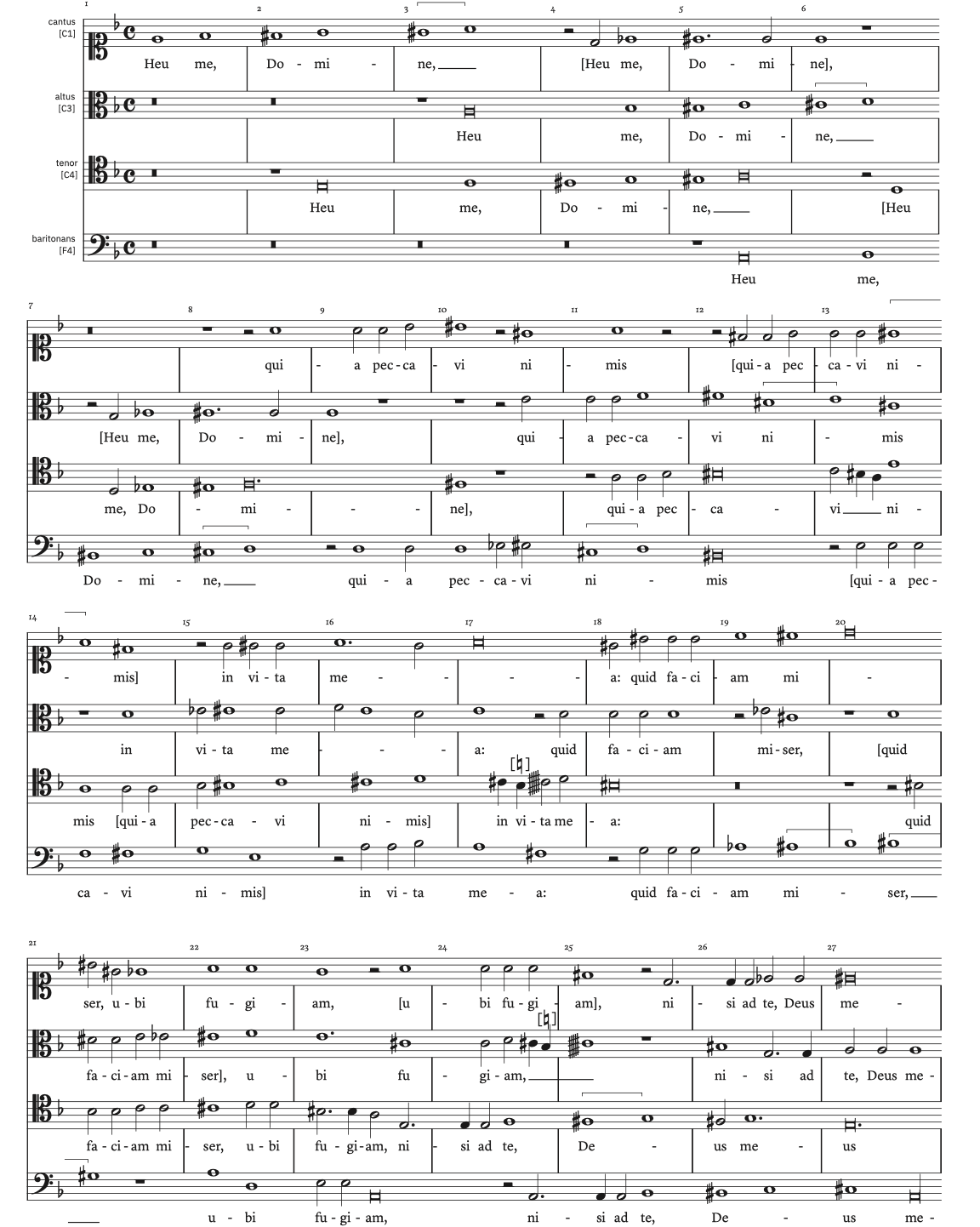
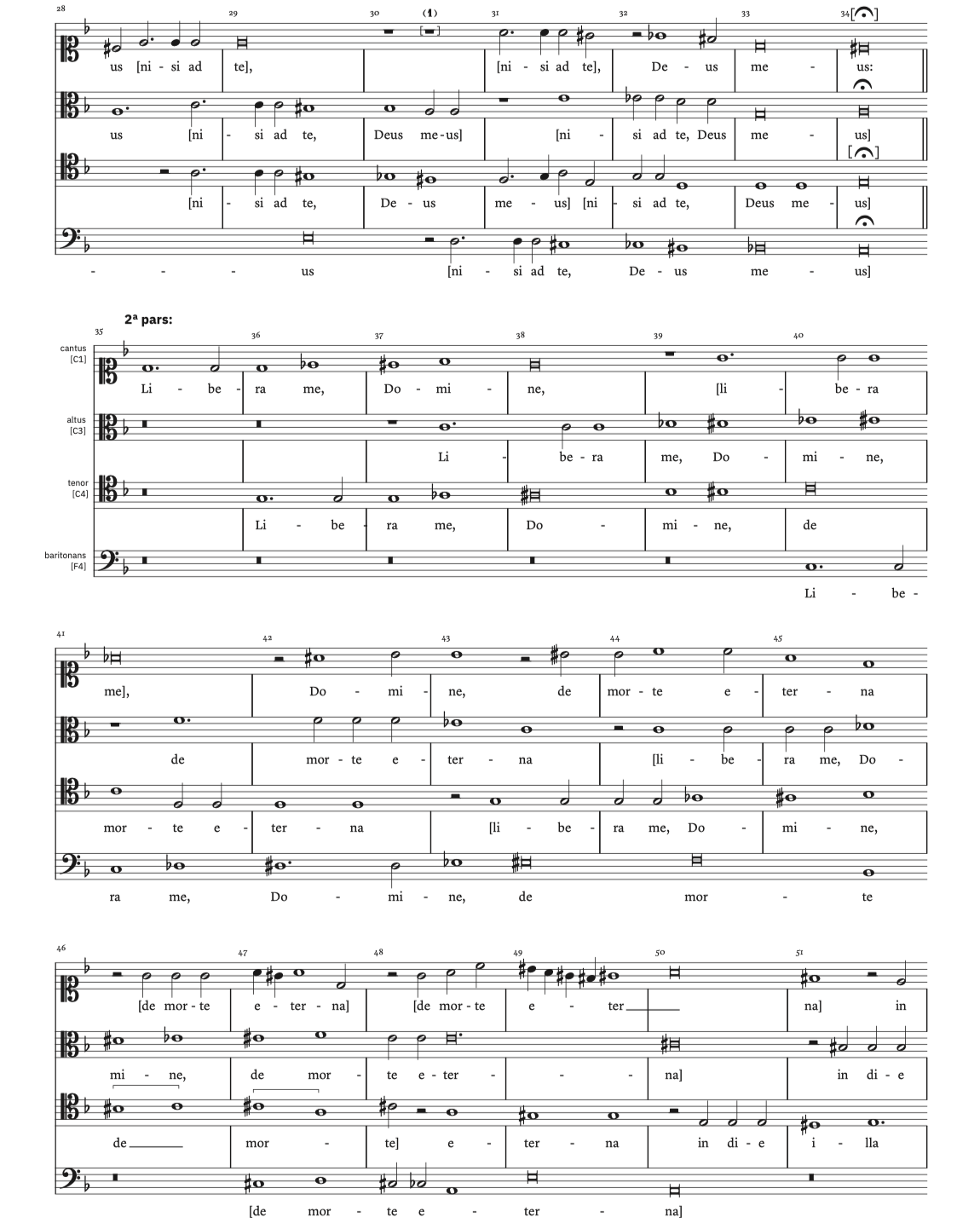
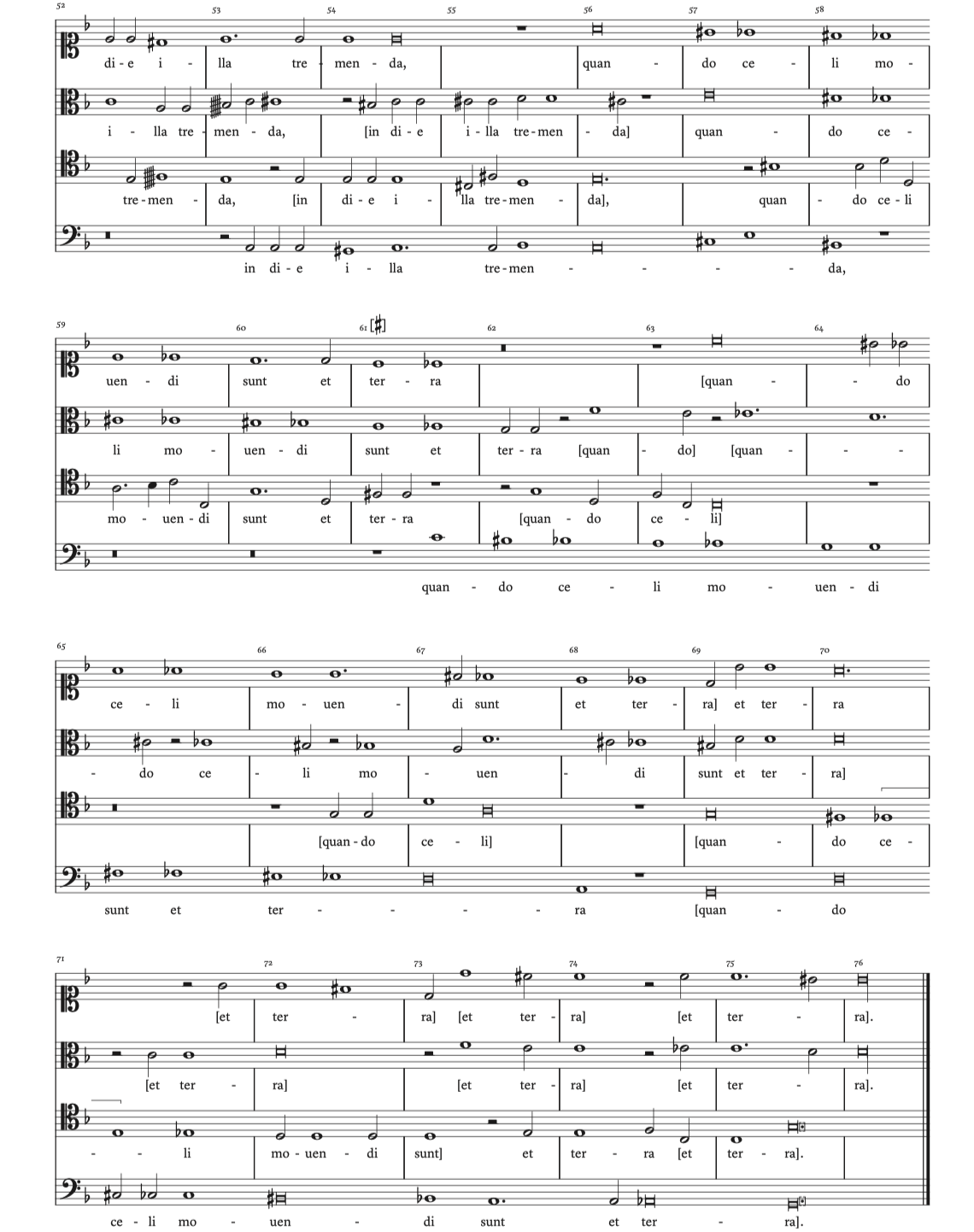
[Ex. 242] exemplo del progreso cromatico segun los scilicet semitonos; y otros pasos mas instrumentales que para cantar:
are other intervals than those the ancients have said to be cantables [singable], which, in my opinion, are not like that of the [comma], because there is no human being who can sing it, as the smallest [interval] that Boethius says to be singable is the diesis, which has two commas. But, except [he did something worthy of] reverence, he would not sing such a diesis in the enharmonic genre. Or, if he sang it, [it is because] he was born before us, at a time when nature was more perfect than it is now: for which reason, it is no wonder that he sang it.
[Ex. 242] example of the chromatic progress according to the said semitones; and other steps more instrumental than to sing
[Ex. 242][^*]
Audio: link to YouTube
[^*]: [Although the four voices are shown here, only the cantus and tenor parts are notated in this manuscript folio. In the manuscript, the altus and baritonans parts appear in the next folio.—Tr.]